
Keep available surplus for later
A battery stores energy; it does not generate it. Available solar surplus can charge storage after household loads are served. Usable capacity, reserve settings, conversion losses and power limits determine what is available later.
Solar -> home loads first
             |
      available surplus
             |
          battery
             |
later household useELV reduces high-voltage exposure
Atmoce describes its MS-16K-U BattBank architecture as extra-low voltage, below 60 V DC. It markets this as avoiding high-voltage DC arc faults. This is a manufacturer claim about that architecture, not a guarantee that the complete installation cannot arc, shock or catch fire.
A DC arc is current crossing an unintended gap, producing intense heat. Reducing high-voltage DC exposure is a safety benefit, not permission to touch conductors. AC connections, stored energy and fault currents still require qualified installation, isolation and protection.
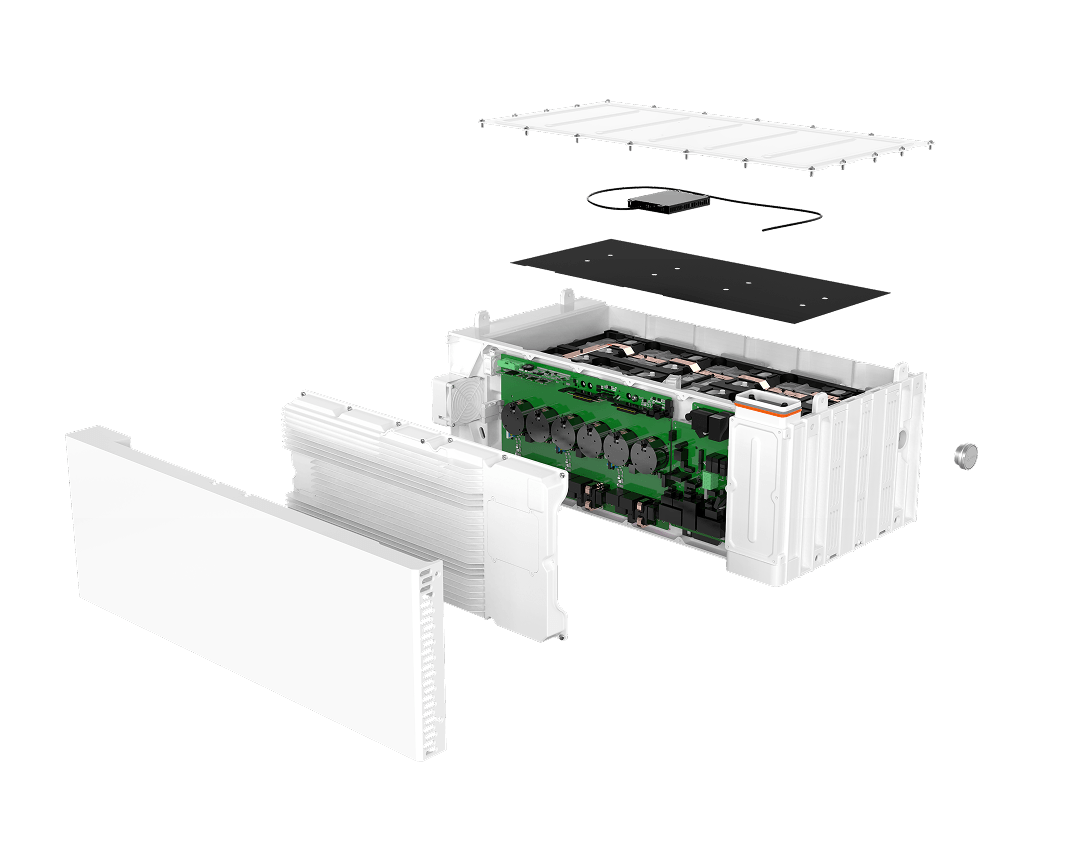
IP66: dust and water-jet protection
Atmoce lists IP66 for MS-16K-U: dust-tight enclosure protection and resistance to powerful water jets under test conditions. It is not an immersion rating or permission to install in a flood path.
Correct seals, cable entries, mounting, clearances and the installation manual still matter. Ask the installer to assess flooding, heat, salt exposure and damage. IP66 is not a fireproof or indestructible rating.
10,000 cycles: count the whole cycle
Atmoce lists 10,000 cycles for MS-16K-U BattBank. The public product pages do not state a complete cycle-test protocol; ask for the model-specific test conditions and retained-capacity endpoint.
For this explanation, one full cycle is a full discharge plus recharge back to the starting charge level: one cycle, not two. Equivalent full cycles accumulate partial use. Two 50% discharge-and-recharge cycles represent roughly one equivalent full cycle, not two full cycles. The manufacturer's throughput and capacity convention determines its actual counter.
At one equivalent full cycle per day, 10,000 / 365.25 is about 27.4 years. That is a mathematical illustration, not a guaranteed 27-year life. Calendar aging, temperature, depth of discharge, charge/discharge rate and remaining capacity all matter. A cycle count does not stop aging when the battery is idle.
100% -> 0% -> 100% = 1 full cycle
100% -> 50% -> 100%
100% -> 50% -> 100% = about 1 equivalent full cycle total
Lifespan, cycles and warranty are different
The English BattBank page advertises a 15-year lifespan. The French BattBank page advertises up to 10 years of warranty. Neither statement turns 10,000 cycles into a 27-year warranty.
Country, model and revision terms differ. Do not transfer BattBank claims to another M-ELV battery or extend a Philippine warranty from a foreign marketing page. Your signed equipment schedule and applicable local warranty determine coverage, capacity or throughput limits, registration, exclusions and claim procedures.
France: real rooftop installations
Atmoce France lists rooftop projects in Grenoble, Marches en Savoie and Mont d'Or. The entries show MI-500 microinverters and a combiner; they do not list BattBank storage. These are documented solar installations, not proof of 10,000 battery cycles or 27 years of battery operation.
Atmoce's Asia-Pacific case page also lists a 3.6 kWp Rouen rooftop with MI-450 microinverters and a combiner. It is not described as a battery endurance test. No model-specific battery endurance report is linked in these case entries; ask for the actual report before treating a marketing figure as an independently verified test result.
Sources and further reading
Official and manufacturer references checked 19 October 2026. Requirements and product terms can change.